Pooja is the act of showing reverence to a god, a spirit, or another 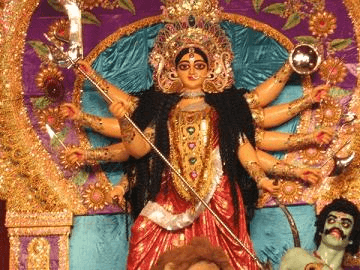 aspect of the divine through invocations, prayers, songs, and rituals. An essential part of Pooja for the Hindu devotee is making a spiritual connection with the divine. Most often that contact is facilitated through an object: an element of nature, a sculpture, a vessel, a painting, or a print. It is possible to reduce the suffering due to the unfavorable position of planets through sincere reliance on God, the One who controls the planets.
During Pooja an image or other symbol of the god serves as a means of gaining access to the divine. This icon is not the deity itself; rather, it is believed to be filled with the deity’s cosmic energy. It is a focal point for honoring and communicating with the god.
For the devout Hindu, the icon’s artistic merit is important, but is secondary to its spiritual content. The objects are created as receptacles for spiritual energy that allow the devotee to experience direct communication with his or her gods.
There are several Poojas which people can do for specific events, such as the starting of a business, or the beginning of a journey. The benefit of this type of Pooja is to remove obstacles. The Poojas are performed on behalf of those who request them by us.
Benefits of a Pooja
According to our sacred texts, Pooja –
* Disciplines the mind
* Energizes the deity and the worshipper
* Enables one to experience oneness with divinity as we unconsciously offer the self through our material offerings.
Pooja establishes a bridge between the worshipper (the lover) and the deity (the loved). It facilitates flow of love-energy in both ways. This energy not only sanctifies the self but also re-vitalizes the body’s resources, making one experience, what is called HOLY BLISS. Thus both the worshipped and the worshipper benefit from Pooja.
How Pooja is Performed?
A worshipper is required to be pure of body and mind. The Puranas lay more stress on the quality of devotion and good behaviour than on rigid Pooja procedures. Pooja originated as a substitute to homa and other Vedic sacrifices which women and Shudras could not perform and which required animal sacrifices. Due to Dravidian, Buddhist and Jain influences that preached non-violence, the killing or sacrifice of animals was discontinued and with the development of iconography, idol worship and Pooja took the place of sacrifice. It was also recognized that worship was essential for all, whatever the gender or caste and therefore Pooja was formalized as a universal option.